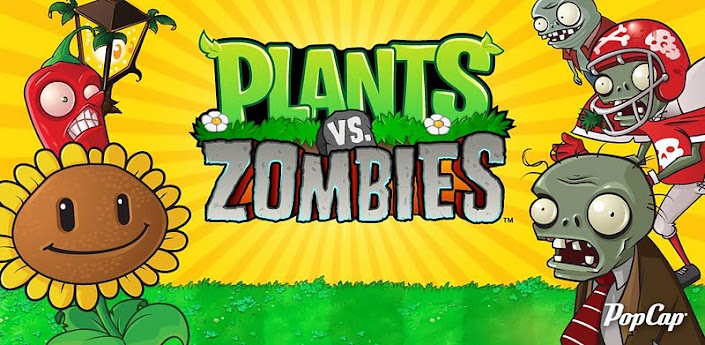
Plants vs Zombies is an awesome flash defense game in which you take control and strategically place plants to defend against the incoming hoarde of zombies! The further you progress the more plants you unlock which have different abilities!

Plants vs Zombies is an awesome flash defense game in which you take control and strategically place plants to defend against the incoming hoarde of zombies! The further you progress the more plants you unlock which have different abilities!
All levels are unlocked! Come to rescue the trapped birds! Those poor angry birds are kidnapped in a magic city in various cages and they are in desperate need of your help! The angry birds are undergoing mistreatments and hunting from the pursuer all the way, while they need to rescue their companions Bul and Jewel--the leading birds in RIO from the trap in the spooky magic city.
Angry Birds Tazos are back with a brand new web game! You need to login to sign into the game to play it but there are a weekly tournaments, so get your gaming on!
What do you get?
You can play it here: tazos.angrybirds.com




Despite a burgeoning market filled with educational children’s games and apps which aim to turn smartphones and tablets into tools for learning, when it comes to time spent actually playing games, kids are still gravitating to games that are more “fun” than instructive. At least that’s what the folks atKytephone recently discovered. The startup, which offers tools that turn Android phones into kid-safe devices with parental controls, found that Rovio’s Angry Birds Star Wars is the most played game since its release, and several other Rovio titles top the charts in terms of time spent gaming.
Kytephone pulled this data from a sample size of 13,000 children, aged 8 to 14 years old, located in over 70 countries. Kytephone co-founder Anooj Shah says the team didn’t find any major differences in app usage between regions. “Everyone seems to love Rovio games, regardless of where they live,” he says. The company looked at this data during the holidays and then again in the new year to see if anything had changed.
During the holiday season, the company found that children were spending 51 percent more time in Angry Birds Star Wars, compared with Angry Birds, despite only having 40 percent of its install base. They spent 197 percent more time in the Star Wars version than Angry Birds Space, despite having only 57 percent of its install base.
The most popular games, in terms of time spent playing, were as follows:
In the beginning of January, usage changed slightly, and Kytephone saw an increase in Bad Piggies, which then moved to become the most addictive game. The top three games now remain Star Wars, Bad Piggies and the original Angry Birds.
Angry Birds Star Wars has an install base that’s 60 percent larger than Bad Piggies, Shah noted, and during the holidays it increased that base by 50 percent while Angry Birds Star Wars increased by 60 percent.
But in terms of hours spent playing, Bad Piggies wins as it’s played an average of 1.12 hours per install. Star Wars is a close second with 0.8 hours per install, and the original Angry Birds is played 0.27 hours per install.
These figures are a different way of looking at the kids’ mobile gaming market than those studies where only downloads or even “actives” are measured, because Kytephone’s rankings are based on how long kids are playing these games, not necessarily how often. But to be clear, they’re not representative of an overall mobile trend in children’s gaming, since Kytephone is currently an Android-only service. The iOS platform has a wider variety of games and kids’ apps, we should mention. In addition, Kytephone’s service is targeted at slightly older kids, because it’s for those who have their own Android device on loan from their parents. That is, it can’t tell what games kids play when they just “borrow” mom or dad’s phone for a few minutes, as many younger children do. It also misses out on the entire iPad gaming market, which a number of kid-friendly app makers have specifically targeted.
That being said, what these numbers do show that Rovio has managed to increase the stickiness and addictive nature of its games over time, at least in terms of children’s preferences.
Depending what's behind it, you may be able to shake some of that parenting guilt.Guilty of letting an electronic screen babysit your children?
Queensland University of Technology researchers from the Games Research and Interaction Design lab have released a paper looking at active versus passive screen time for young children, predominantly two to five-year-olds.
What they found was not all screen time should be considered equal and while government recommendations may advise just one hour of screen time for young children a day [and none for kids under two] it didn't take into account the difference between actively engaging in a screen activity and passively absorbing media.
“The major thing we had an issue with, with the government recommendations, was they treated all types of screen time as being equivalent,” Dr Penny Sweetser said.
“Whereas if you look at all the different activities which make up screen time, you could be TV viewing, using your computer, children doing their homework on a computer, reading a book using an electronic reader, playing video games on something like an iPad or engaging in physical games on something like an Xbox Kinect.”
The research team proposed screen time could be divided into at least two different types – passive, in which participants are sedentary and are passively exposed to media and active, in which participants are either cognitively or physically engaged with the media.
The researchers divided active screen time further – into cognitively and physically active screen time.
“For physically active games we found that they can actually be comparable to physical exercise - similar in intensity to light to moderate walking, skipping and jogging - and they actually have a host of other benefits," Dr Sweetser said.
"They can improve academic performance, social skills and self esteem, they can motivate young children to exercise and be more active in general and they can improve their academic performance,” Dr Sweetser said.
More specifically, video games had been linked to improved visual attention, problem solving, conductive reasoning, coordination and the tracking of multiple objects.“If we look in terms of cognitive reactive, there is actually quite a substantial body of research that illustrates the benefits of active screen times in terms of children's cognitive development. Dr Sweetser said some of that research associated computer use during school years with improvements in school readiness, cognitive development, helping to facilitate social interaction and language use improvements, such as word knowledge and verbal fluency.
So while Angry Birds or Fruit Ninja is not the worst way to distract a bored child or keep them quiet long enough to finish your coffee, Dr Sweetser still recommends parental interaction.
“You might want to consider playing with them and engaging with them and making sure that the content they are using is appropriate, that is it is providing them with some sort of educational stimulation,” she said.

Any day now, I will become a parent. To prepare, I’ve been looking at a lot of apps that claim to be educational and fun for children, but what I already know from being an uncle is that kids don’t care about those educational apps. They just want to play Angry Birds. The good news — depending on your definition of that, I guess — is that my experiences with my nephews has just been borne out by science. A new study shows that kids log more time play Rovio’sAngry Birds games than any educational games, but I don’t think that’s a bad thing. Angry Birds is a great primer for learning physics.
The study was done by Kytephone, a company that gives parents tools to turn their Android phone into a more kid-friendly device. They studied 13,000 kids between the ages of eight and 14 in more than 70 countries and found that Angry Birds Star Wars was the most popular game, probably because adding lightsabers to things inherently makes them more awesome. It’s joined in the top three by the original Angry Birds and Bad Piggies. The study wasn’t based on downloads, but rather on total time children spent playing each game.
Angry Birds is not an educational game, and when I say it’s a great primer for physics, I don’t mean to say that it teaches kids physics. I have a four-year-old nephew who loves playing Angry Birds, and he’s surprisingly good at it, but it’s not because he has a great understanding of potential energy, gravity, or force of impact. He just knows that if he makes a bird hit a pig hard enough, that pig will probably fall over and disappear.
When he gets older though, and he’s learning about things like potential energy, he could make the connection that the farther back he pulls on the slingshot in Angry Birds, the more potential energy he’s putting behind launching the bird. Being told that an Angry Bird travels along a parabolic trajectory could help him understand what those words mean. Playing Angry Birds Space won’t turn him into an astrophysicist. Could it help to spark his interest in the subject, though? Stranger things have happened
The other lesson to take here is that making a game educational doesn’t really do much if a child doesn’t want to play it. I think kids can learn a lot more from games that are actually fun to play as long as those games have at least a modicum of something educational about them — look at classics of the genre like Math Blasters and Where in the World is Carmen Sandiego?. One thing is for sure, though — nobody’s learning anything from Temple Run, which came in at number eight on Kytephone’s list.

19/1/2013 the release date for Temple Run 2 on iOS, with the developers promising that the Android release will be following next week. While it isn’t a big surprise to see games releasing on iOS before coming to Android, at least there isn’t too big of a gap between releases in this case. There was just one small problem: even though Temple Run 2‘s developers said it will be coming to Android next week, they didn’t give a specific date, leaving many eager fans in the dark as to when the game would actually launch.
Wonder no longer, Temple Run faithful, because now we have that release date. In a rather long interview with The Guardian, Imangi Studios revealed that the Android version of Temple Run 2 will be arriving on January 24. That’s exactly one week from today, so all of you Temple Run addicts don’t have too much longer to wait.
Expect Temple Run 2 to be a big hit when it lands as well, with our friends at SlashGear pointing out that the game has already reached the top of the free apps list on the iOS App Store. Considering the game has been available for about 12 hours, that’s a pretty impressive feat. It had to beat out apps such as Google Maps and Angry Birds RIO to get to that top spot, so we imagine the folks at Imagni Studios are grinning from ear to ear this afternoon.
Temple Run 2 will take pretty much everything you loved about the original Temple Run and make it better, perhaps most importantly adding an all new adventure. You’ll also have your choice from a handful of characters to play as, and new power ups have been added to help you through your never-ending journey as well. The game will of course follow in the original’s freemium footsteps, meaning it won’t cost a cent to download and play once it arrives on the Google Play Store next week. Who’s excited?

In 2011, Temple Run took Canabalt's forever-running blueprint and installed it in a colourful 3D world where you recreate the opening scene from Raiders of the Lost Ark over and over again. Like Professor Jones, the protagonist of Temple Run is trying to escape with a sacred idol looted from an ancient ruin. Unlike Professor Jones' adventure, however, there ultimately is no escape - you will always die, and the reason for playing again is just to get a little farther before your grim demise. Somewhere, Kafka chuckles.
Temple Run 2 does not mess with Temple Run's formula. Given that Temple Run and its Disney-commissioned spin-off Temple Run: Brave were collectively downloaded over 170 million times, there's some pretty defensible logic at work there. Mechanically, the sequel is identical to its predecessor: swiping to take turns in the road, jumping over or ducking under obstacles and using your phone's tilt controls to lean one way or the other. Temple Run 2 is an unapologetically casual game that can be played on the train or the bus with one hand. Your average run won't last a minute - perfect for killing time in a lift or during a television ad break.

Another developer might have been tempted to shoehorn cut-scenes or role-playing elements into Temple Run 2, but Imangi Studios has been far more restrained than that. The additions slot perfectly into the foundations laid out by the original game. There are new power-ups and abilities to purchase with the gems and coins that you collect as you run, a more detailed graphical engine and a brand-new environment, a Temple of Doom-inspired mine cart sequence and (most significantly) an overhaul to the way the game makes money.
The original Temple Run featured in-app purchases that you could buy to resurrect your adventurer or give you a head start on your run - but these were sold rather unobtrusively. Temple Run 2 sticks its hand out a little more prominently, reminding you after every death that "GAME OVER" is only a problem for tightwads.
Still, it's hard to be too bothered by the way Temple Run 2 has implemented its payment model. The coins and gems used to purchase items and resurrections can be earned through play - it's entirely possible to put a lot of time into Temple Run 2 and never spend a penny. As in-app purchase schemes go, this is still on the more generous end of the spectrum.
It's inarguably a very pretty game to look at. The new setting, a lost city in the clouds, is unique and vibrant, the new ziplines are exhilarating to slide down. These graphical improvements come at a cost to performance, however. Woe to the Temple Runner who receives an SMS or a Twitter mention whilst playing - something that killed me more than once, even on the (relatively) beefy iPhone 4S.
Temple Run 2's most unfortunate change seems like a minor one. The sequel omits the original's mile markers that showed when you had passed the longest run of a Game Center friend. I genuinely miss the sense of competition they brought to the game, though I suppose that now it's possible to keep avoiding death for as long as you're prepared to spend on gems, Temple Run 2's leaderboards are better for identifying spendthrifts than anything else.
The biggest flaw Temple Run 2 betrays is its conservatism. The amount of work that has gone into the game is evident, and it's hard to fault an accessible, thrilling game that offers itself to you for free - but it's so similar to its predecessor that it ultimately feels a bit unnecessary.

Rovio has added 24 new Samba-themed levels and a whole bunch of power-ups to Bronze Award-winning movie tie-in Angry Birds Rio.
Naturally, you'll have to do a bit of work before you can play through these new stages.
You'll have to collect lots of stars from other levels to unlock 18 of them, and gather a whole bunch of feathers to unlock the other six.
That shouldn't be too much of a problem, though, given that this update introduces four helpful power-ups.
These power-ups include Sling Scope and Super Seeds - both of which appeared in Angry Birds for Facebook - and two fresh perks (Samba Burst and TNT Drop).
You'll receive 20 free power-ups just for downloading this update, and a further free power-up every day you play. If you need more, power-ups are also available through in-app purchases.


